Friday, November 09, 2012

Coastal Lessons from a Superstorm

What we can learn from "Superstorm" Sandy

If you still wondered whether the coastal zones are at risk we assume that "Superstorm" Sandy, which hit the Northeast of the United States of America in November 2012, has convinced you.

 Here is a good description of the aftermath of this storm.

Sandy courtesy of NOAA

“More than 8 million people lost power, the result of wind, flooding and heavy snow. New York City's intricate subway system suffered the most extensive damage in its 108-year history. The New York Stock Exchange closed for two consecutive days, the first time that had happened because of weather since 1888. The surf in New York Harbor reached a record 32.5 feet -- 6.5 feet taller than a wave spawned by Hurricane Irene. A record high water level also was set at Battery Park in Manhattan, where the surge peaked at 13.88 feet.

Damage estimates put the cost of the storm around $50 billion, the second costliest storm in history, behind Hurricane Katrina.

At least 23 states felt the effects of Sandy, which morphed from a hurricane into a wintry superstorm stretching nearly 600 miles. Sandy was so big, forecasters said, that if it had been a country it would have ranked as the 20th-largest in the world.”  CNN US. http://www.cnn.com/2012/11/04/us/sandy-survivors-victims-narrative/index.html?iid=article_sidebar

What is the takeaway?


First of all, coastal living is NOT all about balmy breezes, gentle breakers, sandy beaches, and chill. Well, sometimes it is but all of that can change overnight because the ocean is a powerful force and weather systems can make it angry, destructive, and deadly.

Second, our infrastructure, building codes, and regulations are now outdated IF there is real climate change coming. A significant part of New York City was flooded including subways and tunnels. Moreover, electrical systems which are underground in New York were inundated, hospitals lost power, backup generators failed because they had been installed wrong.

A brouhaha also exploded over the loss of electrical power. “Damage from Superstorm Sandy to the electricity system in the U.S. Northeast exposed deep flaws in the structure and regulation of power utilities that will require a complete redesign, New York Governor Andrew Cuomo said. But at least some members of one utility oversight panel later fired back, saying it was the governor who should take responsibility. "We're going to have to look at a ground-up redesign," Cuomo said while criticizing the utilities he called virtual monopolies run by nameless and faceless bureaucrats.” http://www.trust.org/alertnet/news/nys-gov-cuomo-blasts-utilities-for-sandy-outages
Decades of regulation went dawn the drain so to speak when Sandy punished the local ecosystems with the storm dumping of fuel, toxic chemicals, litter, garbage, debris, asbestos, and every kind of dangerous, damaging flotsam into the ocean, beaches, coast, wetlands, and rivers.

For students of coastal policy this storm was a tragic but perfect case study of all the interconnected factors that constitute the challenge of Coastal Zone Management (CZM).
Recovery: Many agencies at the local, county, state and federal level are involved in responding to a coastal disaster. Private charities and non-profits as well as the Red Cross also mobilize.
Then there is NOAA. “NOAA continues to work in partnership with other federal, state, and local partners in response to the devastation of Hurricane Sandy. NOAA’s efforts are focused on navigation surveys to restore maritime commerce; aerial surveys to assist in those efforts and to aid on-the-ground responders from FEMA and local authorities; and in oil spill cleanup and damage assessment.  NOAA’s National Weather Service is also keeping authorities aware of changing weather conditions that could impact recovery and response efforts.” http://oceanservice.noaa.gov/news/weeklynews/oct12/nos-response-sandy.html

Saturday, September 08, 2012


http://www.pewenvironment.org/campaigns/global-ocean-legacy/id/8589941025

"Our oceans contain most of Earth’s biodiversity, yet only a tiny fraction is protected. Overfishing, pollution and climate change threaten to degrade the special places in our oceans that remain healthy and teeming with life.

Protecting these places–before it is too late–is critical. Just as national parks conserve our lands,  marine reserves can help ensure ocean health for generations to come.

Global Ocean Legacy, a project of the Pew Environment Group and its partners, aims to establish a worldwide system of very large, highly protected marine reserves where fishing and other extractive activities are prohibited. We work with local citizens, governments and scientists around the world to protect and conserve some of the Earth’s most important and unspoiled marine environments."

This is a site that anyone interested in coastal research and coastal policy MUST visit frequently.


***

Friday, April 08, 2011


The earthquake/tsunami crisis in Japan is a wake up call for all coastal communities.

I have made the case in a video blog http://vimeo.com/21824508

For American the lesson is that these phenomena are real. The second is that the United States is just as vulnerable as Japan especially the Pacific Northwest - Oregon and Washington State in particular. The third lesson is that American states, governments, and people are less well prepared than the Japanese were and we saw what a terrible catastrophe happened there even WITH all the preparation.

You can post your comments on the video site. at VIMEO. Thanks.

Steffen Schmidt and Paul Schmidt, Instructors

Monday, February 21, 2011

RISING OCEANS AND COASTAL POLICY

(Photo - Manhattan, New York., courtesy of Smart Planet)


The Earth Policy Institute reported that "The leaders of Tuvalua tiny island country in the Pacific Ocean midway between Hawaii and Australiahave conceded defeat in their battle with the rising sea, announcing that they will abandon their homeland. After being rebuffed by Australia, the Tuvaluans asked New Zealand to accept its 11,000 citizens, but it has not agreed to do so. "

This is a dramatic example of policy in response to rising sea levels and their future impact on the worlds coastal zones. In other places the discussion is much more subtle yet still important.

For example, there is a new report by the North Carolina Coastal Resources Commission.

The report, " ... details an expected range of relative sea level rise of 15 to 55 inches above the current sea level by the end of the century. ... the panel recommended that the state adopt a 1-meter (3.28 feet) rise of sea level by 2100 as a benchmark for planning purposes. Sea level rise is expected to accelerate over the next century, and the 1-meter benchmark is roughly three times the current rate of sea level rise."

This report represents just one of many examples of concern by coastal policymakers of how to address the issue of sea level rises. Interestingly, around the world the most successful planning has come when the issue of the CAUSES of sea level rises is largely ignored (i.e. natural cycle vs. caused by human activity.)

We find that very interesting. By ignoring the causes policymakers can circumvent the explosive debate that would immediately ensue between those who believe that human activity is largely to blame vs those who may accept sea level rises. These can be measured by any monkey who observes the wrack zone of a beach can observe higher sea levels - Wrack line is part of the shore just above the mean high tide line where kelp and other marine debris is deposited on the sand.

North Carolina would be the first US state to develop an explicit coastal planning policy based on sea level rises. This has caused a lively debate and concern by many coastal interests.

The Division Coastal Management has begun meeting with counties about the draft policy. Tancred Miller, a coastal policy analyst with the N.C. Division of Coastal Management.

"Miller said they are very early in the process and revisions are likely as input is received. The draft will be reviewed during the Coastal Resources Commission meeting to be held Wednesday and Thursday in Beaufort.

The first draft was enough to elicit the concern of Carteret County leaders, who were the first to meet with Coastal Management about the draft. Following that meeting, Board of Commissioners Chairman Doug Harris sent a letter to all the other coastal counties in the state to make them aware of concerns they have. Such a policy, the letter said, would be used as a “springboard” for future regulations and would have implications on both private development and public infrastructure.

“The implications of this proposal in terms of its geographic scope and potentially detrimental economic impact are enormous,” Harris states in the letter. “This is perhaps the most important and pervasive piece of policy the CRC has considered in a very long time, and I’m respectfully requesting your attention to this matter, and ultimately your support in repudiating the proposal altogether.”

In a phone interview, Harris said there are concerns about the 1-meter benchmark and some of the date being used to develop the policy. Predicting sea level rise is uncertain, and the letter questions the validity of the 1-meter prediction for sea level rise.

“A 1-meter sea level rise is almost three times the existing rate and will cover square miles upon square miles of tax base, infrastructure and natural resources in just about every CAMA county,” the letter states. “Again, we believe codifying this prediction is cavalier with very little thought to how it will impact the livelihoods of citizens and the economic fortunes of the coast — development, tourism, tax bases, infrastructure, military operations and more.”

So, as you can see discovering and predicting a rise in sea levels is one thing. Acting upon it by forcing coastal communities to design their development and construction policies around a series of regulations that anticipate these rises in sea level is quite another.

This issue is a pressing problem for coastal zones around the world because, as the Earth Policy Institute reports, "low-lying coastal countries are ... threatened by rising sea level. In 2000 the World Bank published a map showing that a 1-meter rise in sea level would inundate half of Bangladesh's riceland. With a rise in sea level of up to 1 meter forecast for this century, Bangladeshis would be forced to migrate not by the thousands but by the millions. In a country with 134 million peoplealready one of the most densely populated on the earththis would be a traumatic experience. Where will these climate refugees go? "

The challenge for international and US coastal zone policy makers is to devise a successful, sound, sustainable, nonthreatening, and economically realistic strategy for incorporating scientific findings about seal level rises into coastal policies that can be sold to the coastal stakeholders. Without the items in bold it will be very difficult to implement such policies.

http://www.earth-policy.org/index.php?/plan_b_updates/2001/update2


* North Carolina quotes are from http://www.enctoday.com/news/rising-88071-jdn-changing-sands.html


Tuesday, January 25, 2011


Well here is the news on some major changes in the prospects for coastal insurance reform.

"The prospects for action in Congress to address the troubled coastal insurance market may have dimmed, after the 2010 elections swept out two leading advocates for the issue and ushered in lawmakers focused on shrinking government and lessening regulations. Gene Taylor, the Bay St. Louis Democrat who had pushed insurance overhauls for years, but who lost his U.S. House seat in November, expressed little hope.

“I think the chances of that happening is right up there with a snowball’s chance in hell,” Taylor said in a phone interview" Source http://blog.al.com/live/2011/01/federal_coastal_insurance_refo.html

So let me share with you the importance of this for coastal policy in general.

Coastal insurance has become more high risk and scarce since the surge in hurricanes and especially Katrina (2005) and RITA (2005), WILMA (2005) and IKE (2008.) (For a great history of named hurricanes since 1919 see http://www.nhc.noaa.gov/HAW2/english/history.shtml)

Coastal insurance has been a complex and crucial issue for coastal states (and coastal nations as well) which depend on business and residential property for a sizable chunk of their tax revenue and economic activity.

Now with the advocates of insurance reform out some argue that it could take another monster hurricane before the issue comes up again.

“That’s certainly what a number of people I have talked to ... have said over the last six months,” said Lloyd Dixon, an economist with the RAND Corporation think tank. “There just won’t be the energy or the impetus to do something unless you have a large event.”

Still, supporters of federal insurance overhauls vowed to press ahead for changes that would bring lower premiums, wider availability of coverage and a more stable distribution of risk.

“I see an opportunity for bipartisan solutions, if we can show that what we’re bringing forward will actually save money,” said Sen. Roger Wicker, R-Tupelo.

Since Katrina struck in 2005, insurance policies near the coast have grown harder to find, and increasingly expensive. Lawmakers such as Taylor and Rep. Ronald Klein, D-Fla., pursued various bills to address the problems, but made little progress.

Klein also lost his bid for re-election last year.

Republicans won control of the House and made gains in the Senate largely by promising to rein in government.

In a newly austere climate, a critical question for any insurance restructuring will be its cost to the government, said Georgia State University insurance professor Robert Klein.

“A congressman who does not have significant coastal constituency would have a difficult time explaining to his constituents why he thinks this legislation should be passed,” Klein said.

Insurance overhaul supporters said that it would eventually prove more expensive for the government to take a pass.

When storm damages overwhelm insurers and property owners, the government gets called in, often at tremendous cost, Wicker said.

“Any new program should be viewed against the alternative,” he said.

Joan Woodward, executive vice president of public policy for Travelers Insurance, said she thinks the new Congress would be more receptive to private-sector solutions than those that depend largely on the government.

Travelers is working to build grass-roots support for its insurance reform ideas, she said. “We don’t want to be one of the bills that sit around for years and years,” Woodward said. “People react to a crisis.”

Rep. Jo Bonner, R-Mobile, echoed that sentiment.

Asked how much progress he expected to see on the issue in the new Congress, Bonner replied with his own question: “How many Category 5 storms are we going to have this season?”

Bonner said he thinks solutions to the insurance problem should come from the state level. “I really don’t want to envision a day where we build another building and add another bureaucracy of federal workers, all with the assigned task of regulating the insurance industry,” he said.

Rep. Steven Palazzo, the Biloxi Republican who beat Taylor, said the coastal insurance issue is a priority for him, but it could be wise to try a different path than before.

“We’re going to begin looking at the alternatives that are out there,” Palazzo said. “The other options failed miserably.”

Here is are two comments from readers to this news. -

Reader 1 - as an independent. it looks to me their could be no greater hindrance to economic growth on the gulf coast than the current insurance structure...when our insurance premium is larger than our house note... we are in trouble...

yet the corporate giants have purchased the politicians at the state and national levels.. and these bought off politicians will put the corporate bottom line above what is right for the citizens of the gulf coast...

bottom line .. it looks like the REPUBLICANS ARE AS BAD IF NOT WORSE THAN THE DEMOCRATS..

Reader 2 - "The insurance industry owns Congress and rents the White House."

http://blog.al.com/live/2011/01/federal_coastal_insurance_refo.html

Monday, January 17, 2011


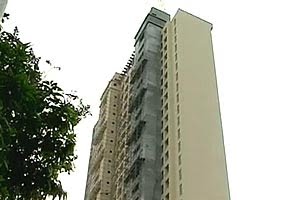
Coastal Building Ordered Demolished! Wow they really mean it when they enforce CZM in India!

"The Environment ministry on Sunday directed the scam-hit Adarsh Housing Society in Mumbai to demolish within three months the “unauthorised” 31-storey building in upmarket Colaba for violating coastal regulations and restore the area in its original condition.

If the society failed to comply with it on its own, “the ministry will be constrained to enforce this direction”, the order said.

The society meant to house families of Kargil martyrs came under the scanner following reports that flats were doled out to politicians, top defence personnel including two former Army Chiefs and bureaucrats as well as their kin.

“The unauthorised structure built at Block-6, Backbay Reclamation Area, near Backbay Bus Depot, Capt.Prakash Pathe Marg, Colaba, Mumbai-400005, A-Ward should be removed in its entirety and the area should be restored to its original condition,” the three-page order said.

In Mumbai, the Maharashtra government said it would soon take a decision on the Environment Ministry’s direction. -Agencies" http://www.bharatchronicle.com/environment-ministry-issues-order-for-demolition-of-adarsh-building-11724


Alaska CZM Issues 2011 - Remember that many CZM laws "sunset." That means that even if there are laws they go away after a designated period of time!

Steffen Schmidt
Prof of CZM

"Coastal zone management changes emerged as a major issue late in the 2010 session and will appear again in January. The proposal the North Slope Borough and some other coastal communities is pushing is to restore the program to something like it was before former Gov. Frank Murkowski brought the program under the control of the state Department of Natural Resources.

Previously communities along the coast had more ability to influence state decisions on development permits, which they argue has been lost now that the coastal management program is operated under the state DNR.

"I can't tell you where we'll be on it," Chenault told the RDC. "I know that my stance is the state can't give up its sovereignty anywhere."

Bills making those changes offered last year by Sen. Donny Olson, D-Nome, and Rep. Reggie Joule, D-Kotzebue, were strongly opposed by Parnell, who argued the legislation would have essentially given coastal communities the right to control state permitting decisions that affect development of state lands.

One area where state officials have dug in their heels is giving coastal municipalities or communities any authority to veto or change air or water quality permits issued by the state Department of Environmental Conservation. Since the state issues these permits under guidelines of the federal Clean Air and Clean Water laws and the U.S. Environmental Protection Agency, any involvement of other entities in the approvals would complicate the permitting process, state Commissioner of Environmental Conservation Larry Hartig told legislators last year.

On the other hand, the clean air and water permit approvals are the kind of decisions coastal communities like the North Slope Borough want to be involved with.

The issue is almost certain to be joined again in the 2011 session. This is also the year in which the coastal management program sunsets, unless the Legislature extends it. Given that, some form of legislation is likely to pass. The question is whether it will be a simple extension of the current program or whether a substantial change will be made."

http://www.peninsulaclarion.com/stories/011611/new_770957860.shtml


Wednesday, December 08, 2010

The "Fishing for Energy Partnership." Removing Marine and Coastal Debris!

Now here is a great idea for reducing marine debris caused by the fishing industry!

Basically here is what's going down ...
"Moss Landing Harbor will be the first harbor in California to join the Fishing for Energy initiative on December 9th. A day-long collection will be held, providing commercial fishermen a cost-free way to recycle old and unusable fishing gear. Gear collected at the harbor will be stripped of metals for recycling at Schnitzer Steel and processed into clean, renewable energy at the Covanta Stanislaus Energy-from-Waste facility in Crows Landing, CA."
We have talked about this issue in the past and several of my students in the "Coastal and Ocean Debris Science" seminar have suggested that we need to initiate major land-based recycling and disposal facilities and programs fora variety of products that now contribute to marine flotsam and coastal debris. Well, this project is a great example of how you can build coalitions for win-win projects to accomplish this!

"Fishing for Energy is a partnership between Covanta Energy (Covanta), the National Fish and Wildlife Foundation (NFWF), the National Oceanic and Atmospheric Administration (NOAA) Marine Debris Program, and Schnitzer Steel Industries, Inc. It was established in 2008 to reduce the financial burden imposed on commercial fishermen when disposing of old, derelict (gear that is lost in the marine environment), or unusable fishing gear and thereby reduce the amount of gear that may inadvertently end up in U.S. coastal waters."

You can find out more from a solid article in PR Newswire.

The other good web site to visit for much more information is at the National Fish and Wildlife Foundation.

Marine and coastal debris and flotsam is rising as perhaps the number one issue (after climate change) of concern to Coastal Zone Managers and students of coastal and marine issues. It is an alarming problem and yet one that lends itself for public support because garbage (which this is to a large extent) is something everyone understands! Also, as this program proves, private business is interested and willing to participate more and more in these types of initiatives because it is great PR, good "green" behavior, and gives excellent community and media good-will to corporations. Once they are on board it also becomes easier to pressure governments and leaders to support debris and flotsam projects because now the pressure is no longer coming from "tree kissers" but also from solid corporate supporters! (No disrespect to my fellow tree kissers, we started making the public and politicians aware of the dangers of pollution and marine/coastal debris!)

I have made this point several times and this news is just proof of the fact that I was right.

So going forward lets keep working on debris projects, learning from smart campaigns and coalitions such as this one.

Steffen Schmidt, PhD.
Professor of Coastal Zone Management and Policy

.

.


Saturday, December 04, 2010


The US government has reaffirmed the oil and gas offshore drilling ban imposed after the BP disaster in the Gulf of Mexico. This move is a classic example of the "damned if you do; damned if you don't" trade-offs that face politicians and policymakers on difficult coastal and environmental issues such as this. (Oil rig image courtesy US Coast Guard)

"President Barack Obama's administration is to maintain a ban on off-shore oil and gas drilling in the eastern Gulf of Mexico and parts of the Atlantic coast. The decision reverses a plan to open up new areas announced by Mr Obama in the spring, just before the BP oil spill. Wednesday's move sparked protests from oil firms and their allies in Congress.

Announcing the ban, which will last until 2017, Interior Secretary Ken Salazar cited the need for "caution and focus" and stricter regulation. "Our revised strategy lays out a careful, responsible path for meeting our nation's energy needs while protecting our oceans and coastal communities," he said in a statement." source http://www.bbc.co.uk/news/world-us-canada-11892873

Here are some comments supporting the ban from http://www.tradeonlytoday.com

"Sen. Bill Nelson, D-Fla., who has consistently pushed to restrict drilling in the eastern gulf, also welcomed the news.

"Drilling off Florida's Gulf Coast is banned at least until 2022 under a 2006 law passed by Sen. Nelson," Nelson spokesman Dan McLaughlin told The Washington Post this week. "The senator is pleased the White House has decided rightly to keep the area off-limits. He hopes Florida's next governor and the legislature similarly will commit to protecting the state's tourism economy and unique environment."

Activists such as Margie Alt, executive director of Environment America, also praised the administration's plan, saying, "Today anyone who loves our beaches, who fishes in the ocean or who depends on a healthy coastal economy can thank the Obama administration for protecting the Atlantic and Pacific coasts and the west coast of Florida from oil drilling. The BP disaster earlier this year was a tragic reminder that drilling is a dirty and dangerous business. The only way to truly keep our coasts and ocean ecosystems safe is to keep them rig-free."

The St Petersburg Times out it this way, " Obama's embrace of a drilling ban won't kill Florida jobs; it will save them. As the painful events of last summer illustrated, even a spill far from Florida shores kills jobs. Far more Floridians have been harmed financially by the Deepwater Horizon oil spill than the 1,000 to 2,500 new jobs the U.S. Minerals Management Service anticipated in Florida from expanded drilling in the eastern gulf." @ TampaBay.com

Opponents, of course, were equally vociferous about the decision. "This is an unfortunate decision that will eliminate badly needed government revenues, inhibit employment growth and increase reliance on imported energy," said Kenneth Cohen, vice president of public and government affairs at ExxonMobil Corp."

"The administration is sending a message to America's oil and gas industry: Take your capital, technology and jobs somewhere else," said Karen Harbert, president and CEO of the U.S. Chamber of Commerce's Institute for 21st Century Energy. USAToday.com

The debate is classic - let private enterprise flourish so we can have jobs in the oil industry and get more oil and gas for the US economy vs. preserve the environment and protect the jobs in fishing, coral reefs, tourism, marine life (as a value in itself) and other areas that depend on safe, clean beaches and oceans.

As student of coastal policy the offshore oil and gas case study is an invaluable example of the myriad of interest groups that play off against each other, push, and pull on pubic opinion, policy makes (regulators), the federal executive branch, Congress, as well as state politics - the governors, the various state industries - those who do business with oil drilling and refining, those that are built on tourism and fishing - state legislatures, and state news media.

In Congress there are several "Iron Triangles" on this issue where congressional committees, lobbying groups, and government regulatory agencies interact with each other in support of policies on which all three "corners" of the triangle agree.

So fore example there is an "oil and gas" triangle consisting of the oil industry lobbyists, the department of Interior and Mineral Management Agency, and House and Senate committees that legislate oil and gas. These will often coordinate and agree on policies (say to expand offshore oila nd gas drilling) There is another triangle made up of environmental groups and non-oil industries affected by oil/gas exploration (and their lobbyists), the EPA, NOAA, and other parts of the Department of Interior and Congressional committees that legislate on the environment and have an interest on sustainable environmentally friendly policies/regulations.

These two "Iron Triangles" are often in conflict with each other. I am sure they are today over the new ban on oil and gas drilling.